Sony har utviklet energiinnsamlingsmodul som effektivt genererer strøm fra elektromagnetisk bølgestøy
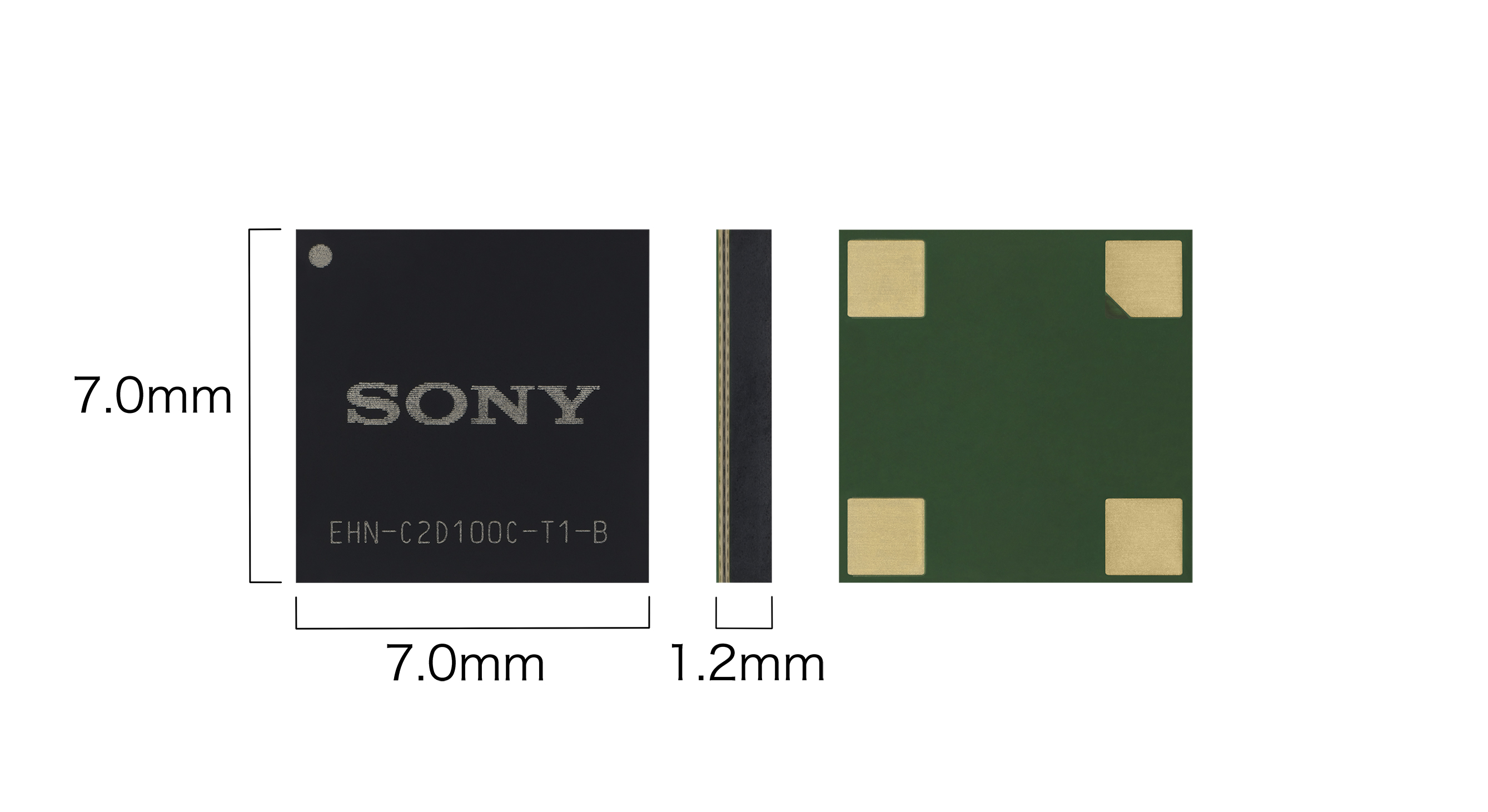
Sony Semiconductor Solutions Corporation (SSS) kunngjorde i dag at de har utviklet en energihøstingsmodul1 som bruker elektromagnetisk bølgestøyenergi. Den hjelper til med å løse strømforsyningsproblemer som oppstår fra populariseringen og sofistikeringen av IoT-enheter.
Den nye modulen bruker teknologi som SSS har kultivert i tunerutviklingsprosessen for å generere kraft fra elektromagnetisk bølgestøy med høy effektivitet. For eksempel kan denne teknologien bruke den konstante elektromagnetiske bølgestøyen som genereres av roboter inne i fabrikker, skjermer og belysning på kontorer, skjermer og TV-er i butikker og hjem o.l. for å gi den stabile strømforsyningen som trengs for å kjøre IoT-sensorer og kommunikasjonsutstyr med lavt strømforbruk.
Forts. ENG
With attention on the challenge of providing power to the increasing number of IoT devices as they grow in popularity and sophistication, this highly efficient energy harvesting technology shows promise for a wide range of applications. SSS aims to employ the new technology as part of its effort to build a power circulation model, thereby contributing to the development of a sustainable IoT society.
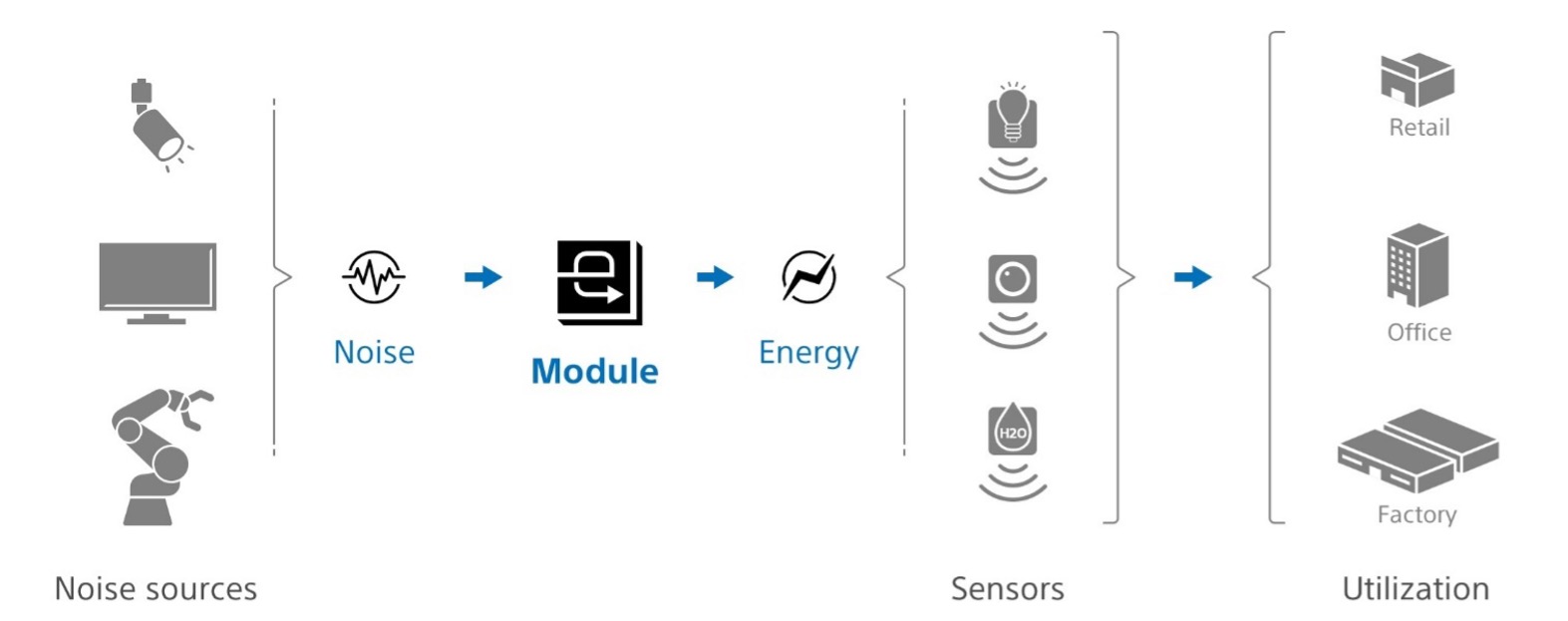
Energy harvesting is a technology that is expected to contribute to both the development of IoT and the sustainability of the global environment, with research being carried out mainly in fields such as electrical waves, light, heat, and vibration. SSS’s new technology is the energy harvesting technology to generate power utilizing the electromagnetic wave noise that all electrical equipment generates.
Based on antenna technology created during tuner development at SSS, this new module uses the metal parts of electronic devices that serve as the source of electromagnetic wave noise as part of an antenna and employs a rectifier circuit2 with enhanced electricity conversion efficiency, for a highly original structure. This allows it to convert electromagnetic wave noise in a range of several Hz to 100 MHz into electrical energy and supply power to low-power consumption IoT sensors and communications equipment, or to charge batteries, despite its compact size. This is the industry’s first3 energy harvesting technology based on this method that achieves highly efficient power generation. By efficiently utilizing previously ignored electromagnetic wave noise as a new power source, it enables a stable power supply for equipment.
The minimal number of constituent components used in the module yields a compact design that allows for greater freedom of installation. Also, as long as electronic devices are powered, energy can be harvested even while they are not in active use, making this technology promising in a wide variety of usage situations such as factories, offices, stores, and homes, both indoors and outdoors.
Main Features
High level of power generation
Utilizing electronic equipment that generates a significant amount of electromagnetic wave noise such as household appliances, computers, lighting equipment, vending machines, elevators, automobiles, and industrial equipment as an energy source enables this module to harvest from several dozen μW to several dozen mW of power. Doing so makes it possible to supply power to low-power consumption IoT sensors and communications equipment.
Applicable to a wide range of use cases
- As long as electronic devices are powered, power can be harvested even when they are not in active use. This method therefore differs from other energy harvesting methods which use sunlight, electrical waves, and temperature differences, all of which are susceptible to environmental factors such as lighting brightness and indoor environments. Thus, the new module enables continuous harvesting.
- The minimal number of constituent components used in the module yields a compact design that allows for greater freedom of installation.
Device status can be identified
Because this technology continuously harvests electromagnetic wave noise from electronic devices, it can also identify the internal status of the electronic device by detecting changes in the harvested voltage. This means, for instance, that it can be used for applications such as detecting whether lighting is functioning normally or predicting device failure, for example in robots with built-in motors.
SSS looks forward to working with partners from various industries to develop products based on this technology, which shows promise across a wide variety of applications.
______________
1Technology that harvests minute amounts of energy that exist in the environment and living things for conversion into electricity.
2An electrical circuit that converts alternating current to direct current. In general, alternating current is used to transmit electrical energy, so a rectifier circuit is used in power sources of equipment that require direct current.
3As an energy harvesting technology. According to SSS research. As of announcement September 7, 2023.